Best Freeze Dry Machine for Home and Small Businesses


With market rates climbing and house costs tightening, many families are searching for ways to maximize their food security and minimize waste. While the transparent cost of a property freeze dryer may look steep, managing it as a long-term money investment shows a different economic picture. By freeze dryer analyzing food spend data, shelf-life abilities, and natural preservation data, the Get back on Expense (ROI) becomes clear.
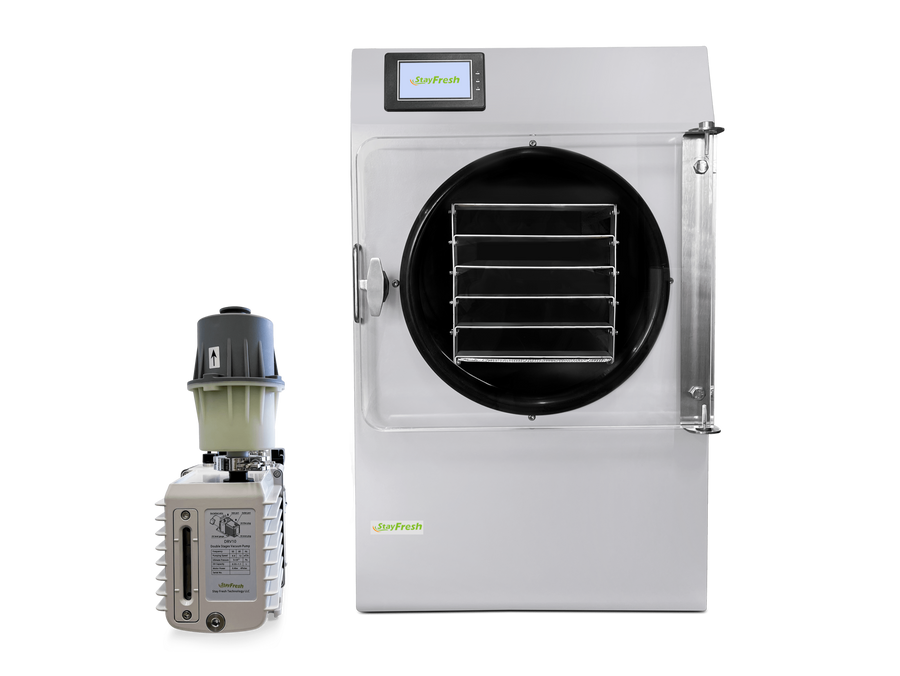
Here is a break down of the value proposition, answered through the most typical questions about the technology.
The amount of money may a freeze dryer actually save a home?
The principal economic gain originates from the extreme reduced amount of food waste. According to the USDA, the common National group of four punches out nearly $1,500 price of food annually.
Whenever you own a freeze dried machine, areas and spoiling create are no more trash; they become shelf-stable meals. By keeping locations and buying ingredients in mass throughout sales, people may reclaim that $1,500 loss.
Furthermore, getting food in bulk—such as for example large cuts of meat or crates of seasonal fruit—often produces savings of 30% to 50% compared to typical retail packaging. If a family group changes their getting behaviors to volume buying and preserving, the device frequently pays for itself within 2-3 decades of typical use.
How can freeze drying assess to canning or dehydrating regarding nutrition?
If you should be investing in food storage, the quality of the merchandise matters. Knowledge regarding natural preservation shows that freeze drying is better than other preservation methods.
• Freeze Drying: Keeps approximately 97% of the food's natural value.
• Canning: Temperature running destroys heat-sensitive supplements (like Supplement C), frequently maintaining only 40% to 60% of nutrients.
• Dehydrating: Generally keeps about 60% of the nutritional price due to temperature exposure and oxidation.
Because the freeze-drying process uses a vacuum and extremely low conditions (-30°F to -50°F) to eliminate water, the mobile framework and nutrient account stay intact. You aren't just holding calories; you are keeping health.
What's the statistical difference in corner life?
The endurance of one's investment is measured in decades, maybe not months. Standard preservation practices have confined lifespans before food quality degrades or safety becomes an issue.
• Fridge Storage: Meals typically yield to fridge burn within 6 to 12 months.
• Processed Things: Home-canned things are often best used within 1 to 2 years.
• Freeze Dried Goods: When kept correctly in Mylar bags with oxygen absorbers, freeze-dried food has a rack life of 25 years.
That durability allows homes to hedge against potential inflation. Dinner preserved nowadays at today's rates can be taken 2 full decades from today without any additional energy prices for refrigeration.
Is the equipment flexible enough to warrant the table place?
Unlike a dehydrator, that is confined largely to fruits and jerky, a freeze dryer are designed for around 95% of individual foods. Including:
• Whole cooked meals (lasagna, stir-fry, soups)
• Raw and prepared foods
• Milk products (milk, cheese, yogurt, ice cream)
• Fruits and veggies
The only real objects that do perhaps not freeze dried properly are people that have extremely high sugar or fat material, such as for instance butter or chocolate. This versatility assures the device is in continuous use as opposed to getting dust, maximizing the amortization of your purchase.
The Award
Whenever you analyze the numbers—$1,500 in annual waste decrease, 97% nutrient retention, and a 25-year ledge life—the freeze dryer actions from a luxurious product to a pragmatic economic asset. For those intent on food freedom and budget management, the mathematics support the investment.